
✅ Frozen French Fries Exporter UK | Eurovan
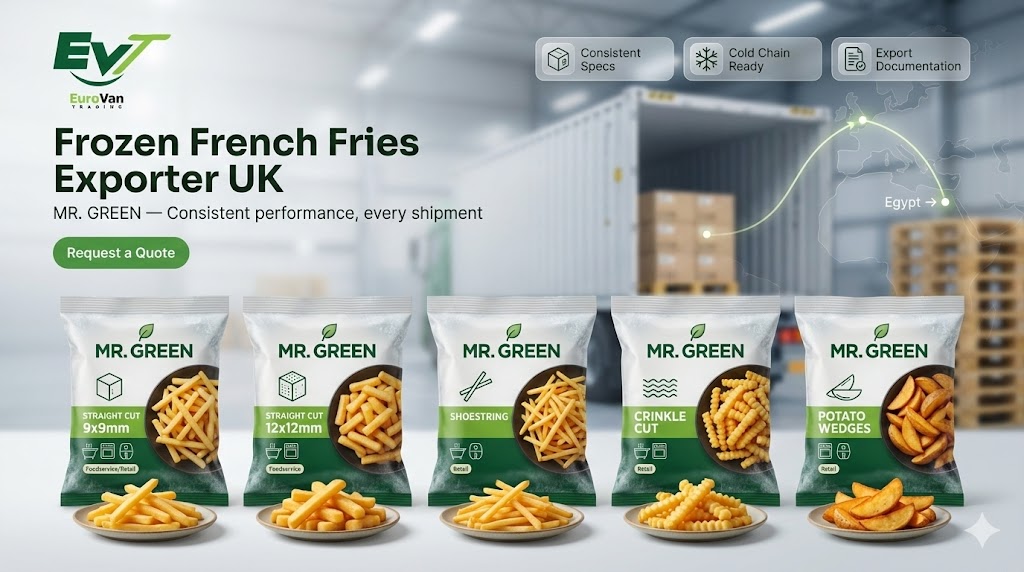
✅ The UK’s love affair with chips—and why importers matter
In the UK, chips don’t sit in one category. Instead, they live everywhere—next to fish on the seaside, under steak in casual dining, inside pub menus as a “must-have side,” and even at home as oven-ready comfort food. Because demand stays high across foodservice and retail, UK buyers don’t just want “any fries.” They want fries that perform the same way every single service: crispy outside, fluffy inside, and consistently golden.
That’s exactly why the UK remains one of the world’s most important destinations for frozen potato products—and why the phrase “frozen french fries exporter UK” signals a serious commercial intent. Importers and distributors who search it usually have one clear goal: secure a stable supply partner who can ship at scale, meet spec sheets, and support approvals without friction.
Trade coverage also reinforces the size of this opportunity. Global Trade Mag highlights the UK as the second-largest import market for preserved frozen potato, with a 2022 import value it cites at $943.9 million.
In other words, if you supply a fries program that matches UK expectations, you’re not entering a niche—you’re entering a high-velocity, importer-driven market.
Now, here’s the practical reality: UK buyers often run tight menus and tighter margins. Therefore, they evaluate suppliers with a simple test: “Will these fries stay crisp and look right—every time—whether we deep-fry them in a pub kitchen or bake them in a retail customer’s oven?” When an exporter answers that question with evidence—cuts, coatings, quality controls, and a predictable cold chain—buyers tend to move forward faster.
Direct Contact – Eurovan Trading (Frozen French Fries Exporter UK)
- Mobile: 00201208287576
- WhatsApp: 00201208287576
- Email: [email protected]
- Website: www.eurovantrading.com
✅ (Eurovan credibility) the best Frozen French Fries Exporter UK
Eurovan Trading supports frozen food supply programs with a business mindset that suits UK importers: consistent specs, export documentation readiness, and scalable delivery planning. If you want to understand Eurovan’s positioning and product ecosystem first, you can review About Eurovan and browse Brands.
Then, when you’re ready to discuss your exact UK requirements—cut size, coating, packaging, volumes, and shipping terms—you can request a commercial offer directly via Get a quote or reach the team through Contact us.
✅ Why the UK buys so many frozen fries (and why Egypt matters)
The UK doesn’t import frozen fries by accident. Instead, the market pulls imports because it rewards consistency, convenience, and scale—all at once. On the demand side, pubs, casual dining, quick-service restaurants, and contract catering need fries that cook fast and behave reliably during busy shifts. Meanwhile, retail consumers still want familiar “British chips” at home, and they increasingly expect good results from ovens and air fryers as well.
As a result, the UK sits near the top of the global import rankings for frozen/prepared potato products. Global Trade Mag explicitly positions the UK as the second-largest import market for preserved frozen potato, which aligns with the UK’s culture of potato-based dishes and the everyday role of chips across menus.
⭐ Britain’s “chip culture” creates predictable purchasing patterns
Because chips feature in so many eating occasions, UK buyers tend to purchase with a repeatable rhythm:
- Foodservice operators reorder frequently to avoid stockouts during peak trading.
- Distributors prefer suppliers who keep stable colour and performance across batches, since inconsistency creates complaints and waste.
- Retail programs value packaging discipline and dependable lead times, because promotions and shelf planning depend on it.
Consequently, UK importers often search variations such as “potato fries supplier Britain” and “import frozen chips UK” when they’re comparing exporters—not only on price, but also on reliability under real British use cases.
💡 Who’s buying in the UK (and what each buyer cares about)
To make this easier, here’s a quick “buyer map” that reflects how UK procurement teams typically think:
| UK buyer type | What they optimize for | What wins the order |
|---|---|---|
| Foodservice distributors | Range coverage + consistency | Multiple cuts, dependable supply, clear specs |
| Pub groups & casual dining | Crispness + hold time | Coated options, golden colour, low waste |
| QSR & fast casual | Speed + uniformity | Tight tolerances, repeatable cooking outcomes |
| Retail / private label | Shelf performance + compliance | Packaging formats, label readiness, stable delivery |
This matters because the UK isn’t a “one-style” fries market. Instead, it’s a portfolio market—and exporters who can supply multiple cuts and performance levels tend to win more repeat orders.
📌 A note on UK import controls (why buyers ask early)
Even when the product is straightforward, UK buyers want to feel confident about border readiness. That’s why discussions quickly move from taste to paperwork. The UK’s Border Target Operating Model (BTOM) sets out the country’s approach to Safety & Security controls and Sanitary and Phytosanitary controls for imports.
At the same time, DEFRA’s plant health guidance notes that processed and packaged fruit and veg—explicitly including “frozen material”—generally do not fall within plant health import controls or require a phytosanitary certificate and IPAFFS pre-notification, from a phytosanitary perspective.
So, practically, UK importers still do the right thing: they confirm the commodity code, confirm what applies to their exact product format, and build a clean document pack. When an exporter supports that process proactively, approvals move faster—and the relationship starts on the right footing.
🤝 Why Egypt belongs in the UK sourcing conversation
Finally, Egypt earns attention not only for production capability, but also because the UK and Egypt maintain a trade framework through the UK–Egypt Association Agreement, which covers trade in goods and includes provisions on preferential tariffs and rules of origin.
Therefore, for many UK buyers, Egypt can feel like a practical sourcing route—especially when the supplier combines quality consistency with export discipline.
⭐ What British buyers expect (taste & performance)
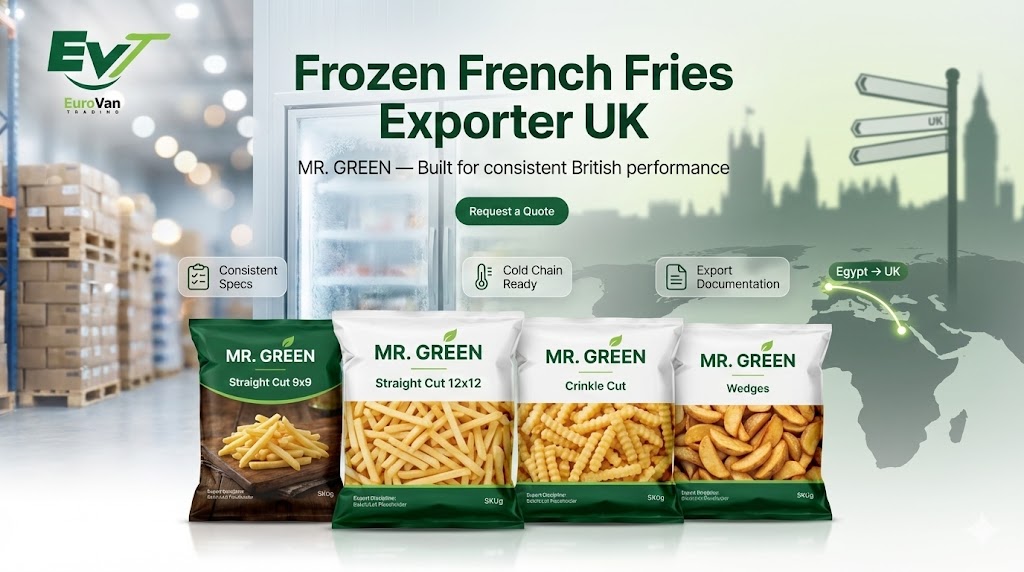
When a UK buyer searches “potato fries supplier Britain”, they usually don’t mean “just supply fries.” Instead, they mean: “Help me deliver the same chip experience every day—across pubs, quick-service, and delivery.” And because the UK is one of the biggest import destinations for preserved frozen potato, buyers also compare exporters quickly and move fast when performance is proven.
1) Crispness that survives real service (not just the first bite)
In Britain, fries often need to travel—from fryer to pass, from pass to table, and sometimes from kitchen to delivery bag. Therefore, UK procurement teams increasingly score fries on “crunch window” (how long they stay crisp) as much as on price.
That’s where product design matters:
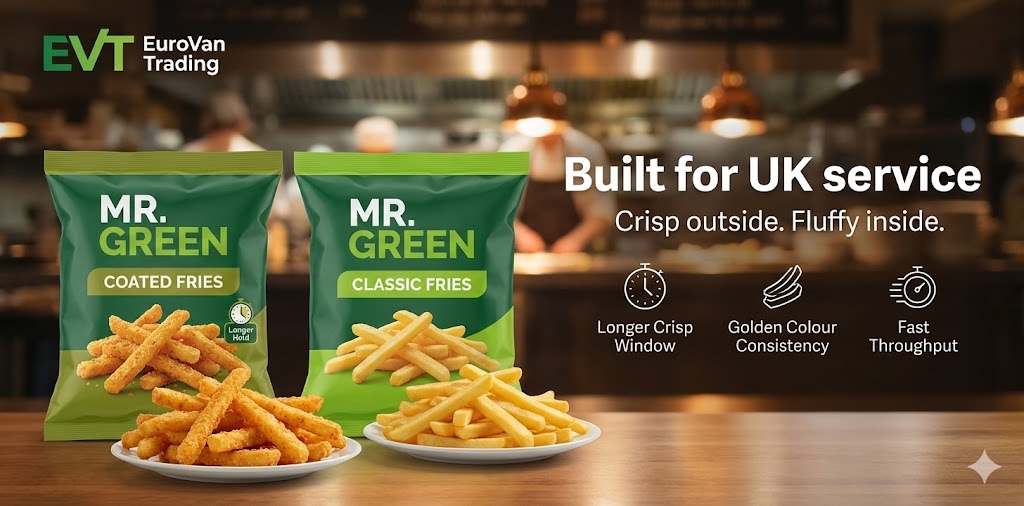
- Coated fries usually hold crispness longer, so they fit delivery, pubs, and high-volume casual dining.
- Non-coated fries often deliver a cleaner potato bite, so they fit chip-style sides where diners expect a simple, classic finish.
Because of that split, the “best” fries aren’t one SKU. Instead, the best program is the one that matches the operator’s service model.
2) The “golden colour” expectation (and why consistency beats perfection)
UK kitchens want fries that look the part—golden, appetising, and not patchy. However, what importers value most is consistency. If colour drifts shipment to shipment, the kitchen changes frying time; then quality drops; then complaints rise. Consequently, UK buyers often request clear colour targets and defect tolerances in the spec sheet (we’ll turn that into a ready-to-use RFQ template in the next sections).
3) Texture: crisp outside, fluffy inside
British “chips” culture leans toward a satisfying contrast: a crisp shell with a soft interior. That’s why cut choice matters so much. Thicker cuts give a fuller, fluffy centre; meanwhile, thinner cuts give a faster cook and snappier bite. As a result, many UK buyers stock more than one cut size so they can serve different menu moments—classic side chips, loaded fries, or steakhouse plates—without forcing one product to do every job.
4) Versatility across equipment (deep fry, oven, and air fryer)
The UK market spans everything from pub fryers to retail customers baking at home. So, importers tend to prioritise fries that behave predictably across cooking methods. In practice, that means:
- predictable cook times for foodservice, and
- reliable crispness/finish for oven and air-fryer style preparation.
5) What Eurovan does differently for UK preferences
Eurovan’s advantage here is not one single feature—it’s the ability to build a UK-aligned fries range (coated + non-coated, multiple cuts) and ship it through a controlled cold chain, so buyers can standardise results across locations. And since UK importers must stay aware of border and SPS frameworks like the UK’s Border Target Operating Model (BTOM), exporters who keep documentation and process discipline tend to shorten approval cycles.
If you want to move from “discussion” to “decision,” the fastest step is to share your target use case (pub side / QSR / retail) and your preferred cut & coating. Then request pricing via Get a quote.
🔥 Fries portfolio for the UK (cuts, coatings, varieties)
A strong “frozen french fries exporter UK” page should never list products generically, because UK buyers don’t buy “fries.” They buy solutions: fast throughput, longer hold time, better plate coverage, or a more premium look. So, below is a UK-focused portfolio map you can use when selecting the right fries range.
🔥 The cuts that sell in Britain (and where they win)
Different cuts signal different menu positions in the UK. Therefore, you’ll usually see buyers mix at least two core styles—one for daily volume, and one for premium plates or loaded fries.
| Cut / style | Best UK use case | Why buyers choose it |
|---|---|---|
| Straight cut (medium) | Pub sides, casual dining, everyday menus | Balanced cook time + familiar “chip” feel |
| Straight cut (thick/steakhouse) | Premium plates (steak, grills), gastro pubs | Fluffy centre + strong plate presence |
| Shoestring / thin cut | Fast-service, loaded fries, high crisp bite | Quick cook + crunchy texture |
| Crinkle | Family dining, retail-style appeal, kids menus | Strong texture + visual identity |
| Wedges | Sharing platters, pub starters | Hearty bite + menu variety |
| Skin-on styles | Premium / “rustic” positioning | Artisan look + stronger visual value |
Because the UK market is both traditional (chips with pub classics) and modern (loaded fries, delivery-first menus), this mix gives importers a practical range that sells across channels.
⭐ Coated vs non-coated: which should you import?
Here’s the simplest way UK buyers decide:
- Choose coated fries when the operator needs a longer crisp window (delivery, pubs during rush, busy casual dining).
- Choose non-coated fries when the operator wants a cleaner potato profile and a classic finish (simple sides, traditional menus).
Importantly, UK plant health rules often treat processed and packaged fruit & veg—explicitly including “frozen material”—as generally outside phytosanitary plant-health import controls, from a phytosanitary perspective (while food hygiene rules still apply).
So, in many cases, the buyer’s “risk” isn’t about the fries category itself—it’s about getting the right classification, paperwork, and consistency to clear smoothly and protect the brand.
💡 Varieties and “program thinking” (how UK importers scale)
Once a UK importer finds a fries line that performs, they usually try to scale it into a program:
- a high-volume core SKU (straight cut),
- a performance SKU (coated for hold time), and
- a premium/menu differentiator (steakhouse, skin-on, or crinkle).
That structure helps them serve pubs, restaurants, and retail customers without constantly changing suppliers. It also makes procurement simpler because pricing and forecasting become stable.
✅ Where Eurovan fits in this portfolio
Eurovan’s role is to help buyers choose the best-fit mix for the UK—based on the cooking method, holding time expectations, and menu positioning—then support the export flow so the product arrives ready for consistent results.
If you want, reply with your target channel (pub foodservice / QSR / retail/private label) and the top 2 cuts you want to lead with, and I’ll continue with the next section:
💡 Specs that UK importers request (the exact quality sheet + RFQ template).
💡 Import Frozen Chips UK: The spec sheet UK buyers expect (and why it speeds approvals)
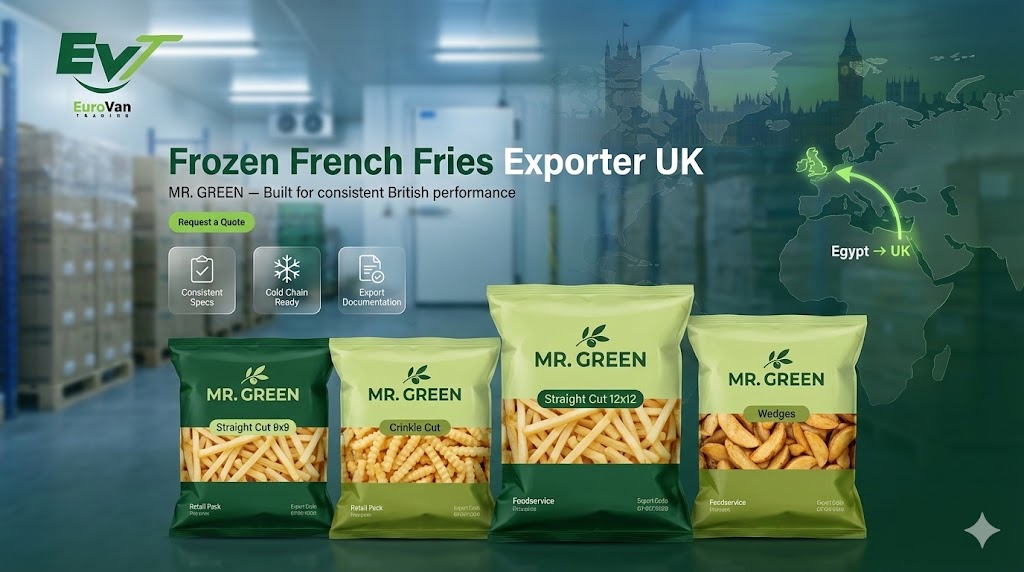
UK buyers rarely approve fries based on a product photo alone. Instead, they approve based on a spec sheet—because the spec predicts what matters most in Britain: crispness, colour, and repeatable performance across busy service. That’s also why searches like “import frozen chips UK” tend to lead straight into technical questions about cut, coating, tolerances, and packaging format.
So, if you want your sourcing process to feel effortless (for both you and your UK customer), you should treat the spec sheet as the “shared language” between the importer, the distributor, and the kitchen.
Potato fries supplier Britain: the core technical specs buyers request
Most UK importers ask for the same set of parameters because they want to control in-kitchen outcomes. Therefore, when Eurovan receives an RFQ, we align product selection to these specs first—then we price.
Here’s a practical RFQ/spec template you can copy into procurement emails:
| Spec item | Typical buyer request | Why it matters in the UK |
|---|---|---|
| Cut type & size | Straight / steakhouse / shoestring / crinkle / wedges + exact mm | Controls cook time, plate coverage, and “chip style” expectation |
| Length distribution | Min/avg length + tolerance | Impacts presentation (pub plates hate short breakage) |
| Coated vs non-coated | Specify coating type if needed | Coated helps hold crispness for pubs/delivery |
| Colour target | “Golden” range + consistency note | Prevents “too pale/too dark” complaints and re-frying |
| Defects tolerance | Broken %, blemish %, foreign matter control | Reduces waste and protects brand reputation |
| Cooking method guidance | Deep fry / oven / air fryer instructions | Ensures repeatable results across UK channels |
| Storage | -18°C handling expectations | Protects texture and prevents clumping/freezer burn |
| Packaging format | 1kg/2.5kg/10kg + master carton + pallet | Aligns with distributor warehousing and retail shelf planning |
This approach works because it keeps the conversation measurable. And once you lock the specs, you avoid the most common UK pain point: “The first container was great—then the next one cooked differently.”
Frozen french fries exporter UK: batch-to-batch checks importers care about
UK importers also look for stability over time, not a one-off “good lot.” Consequently, they often ask exporters how they control consistency across shipments. In a practical sense, these are the confirmations that keep buyers confident:
- Same cut geometry and tolerance across production runs (so fry time doesn’t drift).
- Stable colour and finish (so the product always lands in the same “golden” band).
- Consistent crispness behavior based on whether the SKU is coated or non-coated.
- Cold-chain discipline (because even a great fry loses texture if the chain breaks).
When Eurovan positions a UK program, we focus on these repeatability factors because that’s what UK wholesalers and foodservice buyers actually feel day-to-day—complaints, waste, and inconsistent cook results.
📦 Frozen French Fries Exporter UK: packaging & private label that fits British buying habits
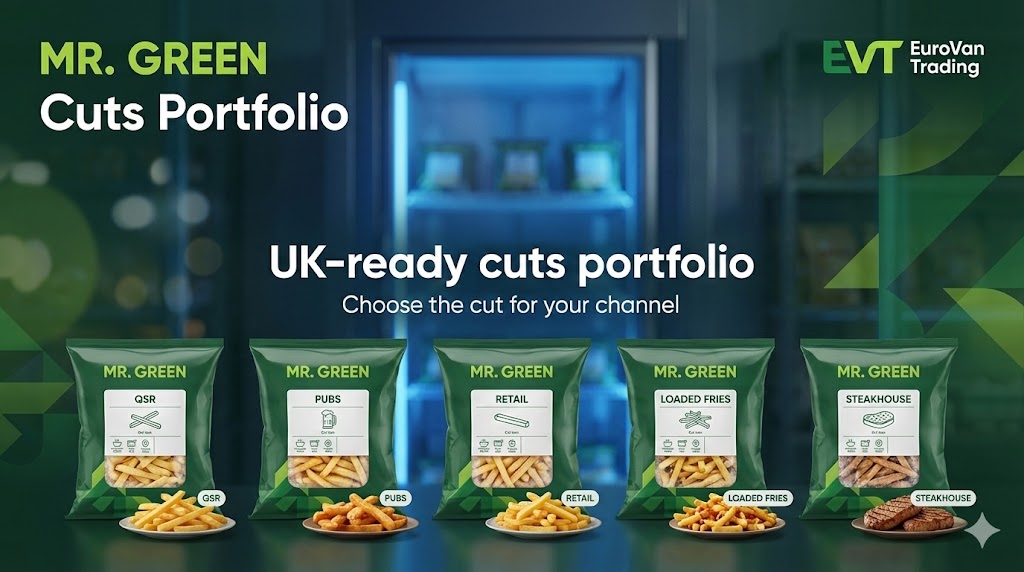
Packaging is not “just a bag.” In the UK, packaging decides whether a product moves smoothly through distribution, stacks well in a cold store, survives handling, and—if you’re doing retail—meets mandatory label expectations. So, for a frozen french fries exporter UK page, this section matters because it answers an importer’s silent question: “Can this supplier support my route to market?”
Import frozen chips UK: foodservice packs vs retail packs (how buyers choose)
UK buyers typically choose packaging based on where the fries will be cooked:
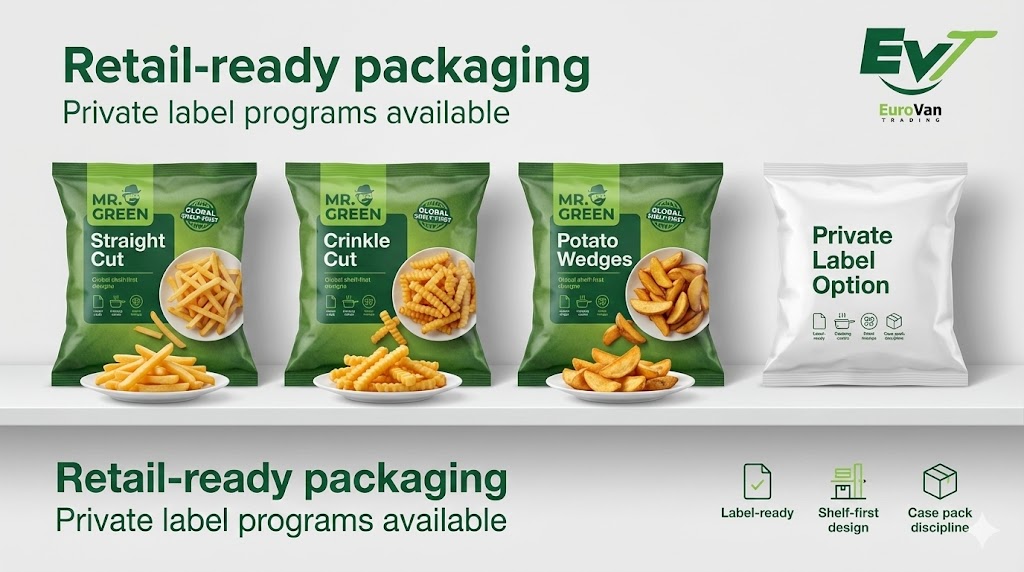
- Foodservice distribution: Buyers lean toward larger bags and master cartons because they optimize warehouse picking and kitchen throughput. They also like formats that reduce torn bags and product loss in cold rooms.
- Retail/private label: Buyers care about shelf clarity, cooking instructions, and label compliance, because the consumer judges the product before they taste it.
That’s why many UK importers run a two-lane strategy: a bulk line for foodservice and a separate retail-ready line for consumer channels.
Potato fries supplier Britain: private label essentials (what must appear on the label)
If you’re building a UK retail or distributor-branded program, labelling is non-negotiable. The UK Food Standards Agency states that all prepacked food requires a label with certain mandatory information, and labelling must remain accurate and not misleading.
In addition, UK government guidance notes that from 1 January 2024, pre-packaged food sold in Great Britain must include a UK address for the food business operator, or—if the FBO is not in the UK—the UK importer’s address.
So, in private label workflows, Eurovan and the UK buyer typically align early on:
- who appears as the UK responsible address (often the importer),
- the final pack format (bag size + master carton),
- and the on-pack cooking guidance (to protect taste expectations).
Because fries sometimes include coatings or seasonings depending on SKU, label setup also needs to reflect the final ingredient statement for that specific product—not a generic template.
✅ A clean private label process (simple, fast, UK-friendly)
Private label doesn’t need to be complicated when the process is structured. A practical UK flow looks like this:
- Pick the “hero SKU” first (often a straight cut, then add coated or premium lines).
- Lock the spec sheet (cut size, coating choice, colour target, packaging).
- Confirm label responsibilities (especially the UK address requirement for prepacked foods).
- Approve artwork + carton markings, then move to production and shipment planning.
- Scale into a program once the first container performs well in real UK kitchens.
If you’re a UK distributor looking to build a long-term range—not just buy spot containers—Eurovan can support the commercial side too via Become a distributor, and for immediate pricing you can use Get a quote.
🚢 Frozen French Fries Exporter UK: Egypt → UK export process (cold chain & delivery)
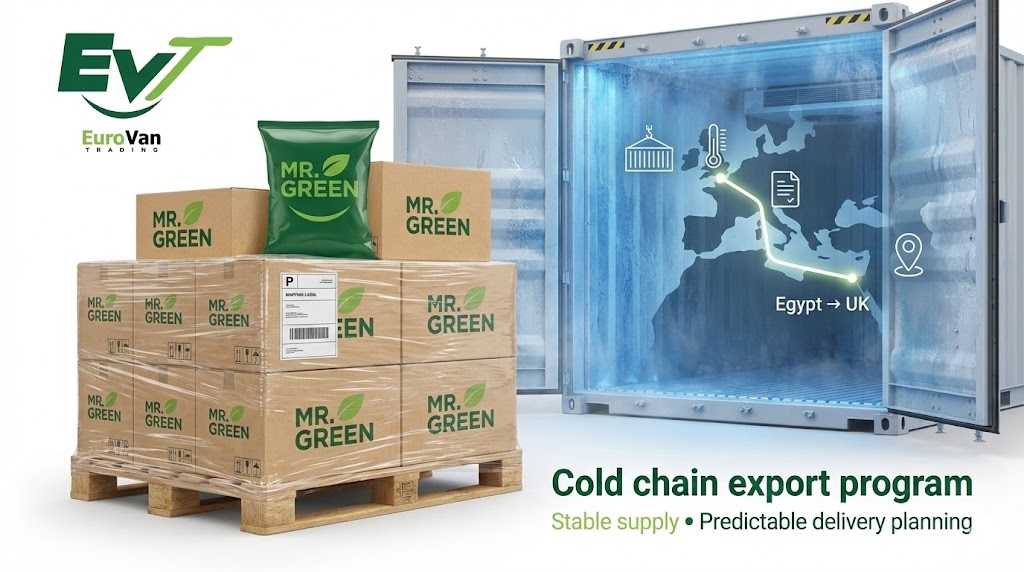
If a buyer searches “frozen french fries exporter UK”, they usually want more than a product list. They want a supplier who can ship consistently, protect texture in transit, and arrive with a document pack that makes customs clearance feel routine—not risky.
That’s why the export process matters as much as the fries themselves.
Import frozen chips UK: the cold chain that protects crispness
Crispness starts long before the fryer. The moment fries leave the freezer, temperature control decides whether the product keeps its structure or loses it.
So, when Eurovan builds an Egypt-to-UK fries program, we focus on a simple rule: protect the chain at every handover—storage, loading, sea transit, and delivery into the UK cold store.
In practice, UK importers like to see:
- storage and loading discipline at frozen temperatures (commonly -18°C),
- correct reefer settings and monitoring,
- clean pallet builds that reduce crushed bags and broken fries (because breakage becomes waste in pubs and QSR).
⭐ Potato fries supplier Britain: the shipping plan UK buyers expect
UK buyers often ask early: “How do you ship, how fast, and what do I need to prepare?” A good answer isn’t generic. It’s a shipping plan built around how UK distributors receive goods.
Here’s a practical view of what importers typically align on:
| Decision | What the UK buyer chooses | Why it matters |
|---|---|---|
| Order size | Trial pallet / trial container → scale | UK buyers love proof in real kitchens before they roll out |
| Shipping terms | FOB / CFR / CIF (depending on buyer) | Keeps responsibility clear and avoids “grey zones” |
| Port & delivery point | UK port + final cold store | Impacts lead time, trucking cost, and appointment scheduling |
| Pallet configuration | Cartons per layer + layers per pallet | Speeds receiving and reduces damage |
| Documentation timing | Docs ready before vessel arrival | Prevents avoidable holds and demurrage |
This structure helps UK importers move quickly because it turns sourcing into a repeatable routine.
🔥 Frozen french fries exporter UK: a “clean document pack” that prevents delays
Even when the product feels simple, the paperwork can slow things down if teams scramble at the last minute. So we treat the document pack as part of product quality.
A typical UK importer file usually includes:
| Document | What it does | Practical tip for UK buyers |
|---|---|---|
| Commercial invoice | Declares value and commercial terms | Keep product description consistent with the commodity code |
| Packing list | Cartons, weights, pallet counts | Match net/gross weights to customs entries |
| Certificate of origin (when applicable) | Supports origin claims | Helpful if the buyer aims for preference under trade rules |
| Product specification sheet | Confirms cut, coating, cooking guidance | Speeds distributor listing and customer approvals |
| Temperature / cold-chain info (as available) | Supports quality assurance | Useful for distributor QA and audits |
You’ll notice we’re not trying to “overcomplicate” it. Instead, we keep it clear, consistent, and matchable—because customs brokers love anything they can verify in seconds.
If you want Eurovan to quote accurately with the right delivery structure, use Get a quote and include your target cut, coating, packaging, and destination port.
📌 Import frozen chips UK: compliance checklist for smooth clearance
Compliance shouldn’t feel scary. It should feel like a checklist that you tick once—then repeat every shipment.
That said, UK border rules evolve, and buyers ask about them early for one reason: nobody wants a preventable hold on a reefer container.
✅ Frozen french fries exporter UK: where BTOM fits (in plain English)
The UK’s Border Target Operating Model (BTOM) describes how Great Britain applies security controls and sanitary and phytosanitary (SPS) controls at the border, including a risk-based approach for categories like plants and plant products.
For frozen fries, the practical takeaway is simple:
- your UK importer (or their agent) will classify the goods correctly,
- then they’ll follow any required border steps for that classification,
- and they’ll keep documentation aligned so entries match the shipment.
So we never “guess” compliance. We support the buyer with consistent product descriptions, stable specs, and documentation discipline—then the buyer confirms what applies to their specific product and code.
⭐ Potato fries supplier Britain: the UK labelling reality buyers must plan for
If the fries go into retail packs (or private label), UK labelling becomes a real part of procurement—not an afterthought.
UK government guidance explains that from 1 January 2024, pre-packaged food sold in Great Britain must include a UK address for the Food Business Operator (FBO), and when the FBO is not in the UK, the label should include the UK importer’s address.
The Food Standards Agency also mirrors this point in its packaging and labelling guidance for businesses.
So, if you import frozen chips into the UK for private label, you typically align early on:
- who appears as the UK address (often the importer),
- the final bag format and carton marks,
- and the cooking instructions that protect the “British crispness” expectation.
🔥 Import frozen chips UK: when IPAFFS and phytosanitary questions show up
Even though frozen fries are a processed product, UK buyers still ask about IPAFFS because many plant/plant-product workflows in the UK use it when specific requirements apply.
The UK Plant Health Information Portal’s IPAFFS FAQ makes a key point: you cannot pre-notify on IPAFFS unless you provide a phytosanitary certificate, and it frames that as a legal requirement for the consignments where IPAFFS applies.
So here’s the safest, buyer-friendly approach:
- Confirm the commodity code and product form with your broker.
- Check whether plant health notifications/certificates apply to that specific code and risk category.
- If the process requires IPAFFS, treat the phytosanitary certificate question as “not optional” for those cases.
Practical note: We help by keeping product descriptions stable and documentation consistent, but the UK importer (or agent) always confirms the final import steps for their shipment.
💡 A “no-drama” UK import checklist (buyers love this)
To make repeat shipments easy, UK importers often run a checklist like this:
| Step | What you verify | Why it keeps shipments moving |
|---|---|---|
| Classification | Correct commodity code + description | Prevents mismatches across invoice, packing list, customs entry |
| Label plan (if retail) | UK address requirement + final pack artwork | Prevents relabelling costs or retailer rejection |
| Border steps | Any notifications/docs required for the category | Avoids last-minute surprises |
| Cold chain | Reefer plan + receiving appointment | Protects texture and reduces claims |
| Quality acceptance | Spec sheet + cooking guidance aligned | Reduces complaints from pubs/QSR |
🤝 Frozen French Fries Exporter UK: Egypt–UK trade continuity advantage (tariffs + origin basics)
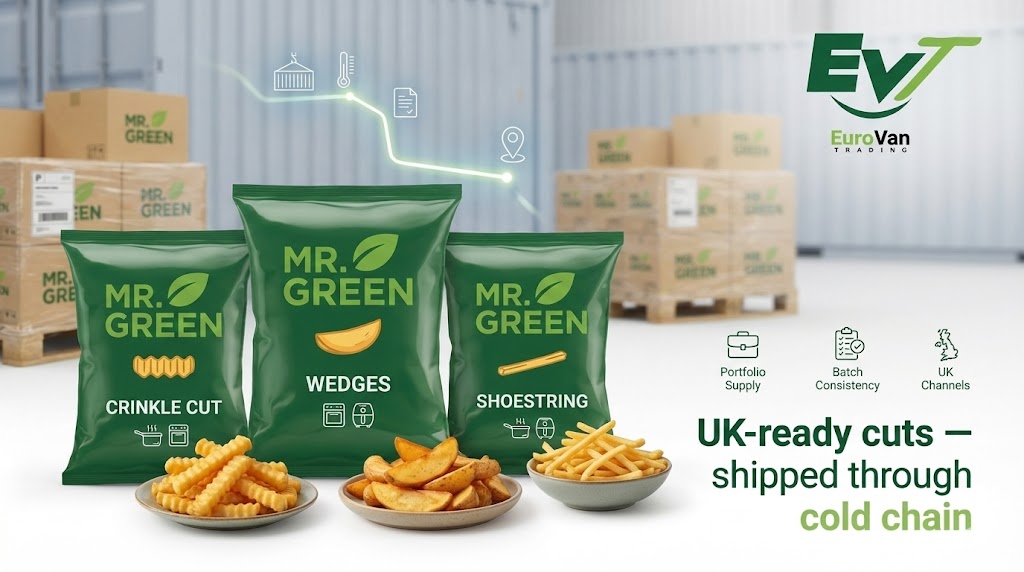
Many UK buyers also ask one commercial question right after quality: “Do we have any tariff advantage from Egypt?”
The UK government provides a summary of the UK–Egypt association agreement, including sections on tariff rates on goods and rules of origin.
In other words, preferential treatment can apply in some cases—but the buyer must meet the agreement’s origin rules and classify goods correctly.
So we position this advantage responsibly:
- We support documentation consistency.
- The UK importer confirms preferential eligibility with their broker based on code + origin rule.
- Then everyone prices the program with clarity (no assumptions, no surprises).
✅ Potato fries supplier Britain: how to place an RFQ with Eurovan (fast + UK-ready)
If you want a quote that a UK procurement team can approve quickly, send a short RFQ that removes guessing.
✅ RFQ inputs that produce accurate UK pricing
Include:
- Cut type + size (and whether you want coated or non-coated)
- Packaging (foodservice bulk vs retail/private label)
- Estimated monthly volume
- Shipping term (FOB/CFR/CIF) + destination port
- Any must-haves (skin-on, colour preference, longer hold time, etc.)
Then send it here: Get a quote
If you’re building a longer-range distribution program in Britain, use: Become a distributor
For direct communication: Contact us
✅ Potato fries supplier Britain: choosing the right fries for pubs, QSR, and retail
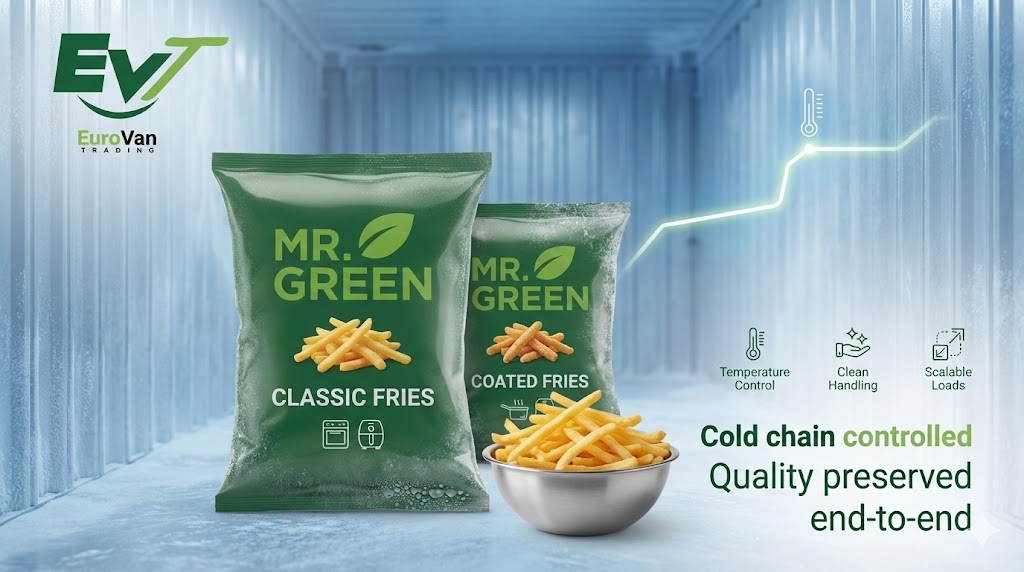
UK buyers don’t import frozen fries as a “commodity” the way some markets do. Instead, they import fries as a menu tool—because chips sit at the heart of British eating occasions, from pub classics to quick-service combos. That cultural demand is exactly why trade coverage ranks the UK as the second-largest import market for preserved frozen potato.
So, if you want your sourcing decision to pay off in Britain, you should match the fries to the channel first, then lock the spec sheet second.
⭐ Import frozen chips UK for pubs: the “hold time” priority
Pubs care about speed, repeatability, and the way fries behave when the kitchen gets busy. Therefore, the most common pub requirements look like this:
- a cut that feels “chip-like” (often medium to thick straight cut),
- strong crispness that survives plating and short holding,
- and a colour that stays golden even when chefs push volume.
As a result, many pub-focused buyers choose coated fries for the mainline SKU, then keep a non-coated classic as a second option for traditional plates.
🔥 Potato fries supplier Britain for delivery-first kitchens: crispness under pressure
Delivery introduces a brutal test: steam. Fries that taste great at the pass can soften in a closed bag. Consequently, buyers who serve delivery-heavy menus typically:
- favour coated lines that keep texture longer,
- choose cuts with enough thickness to avoid drying out,
- and demand cooking guidance that matches their equipment and oil management.
That’s also where an exporter’s support matters: when Eurovan aligns cut, coating, and cooking notes, UK operators standardise results across branches instead of “trial and error” per site.
💡 Import frozen chips UK for retail: oven & air fryer performance
Retail buyers care less about fryer behaviour and more about what happens in a home kitchen. Meanwhile, UK shoppers increasingly expect good results from ovens and air fryers, so they judge fries on:
- crispness without deep frying,
- consistent browning,
- and a potato taste that still feels “British chip” familiar.
Because of that, retail/private label buyers usually spend extra time on pack format + label setup, which is why we covered the UK “address on label” requirement earlier using UK government and FSA guidance.
🔎 Frozen french fries exporter UK: the UK commodity code conversation (HS 2004.10)
UK importers often want a supplier who can talk clearly about classification, because classification drives customs entries, broker workflow, and sometimes additional checks. In practice, frozen prepared/preserved potato products often sit under HS heading 2004, and the “potatoes… frozen” branch uses 2004.10 (with further sub-codes depending on the exact product form).
I’m not listing codes here as legal advice. Instead, think of this as a buyer advantage: when exporter documents (invoice description, packing list, spec sheet) stay consistent with the product’s agreed classification, clearance becomes smoother and repeat shipments become easier.
📌 Import frozen chips UK: regulations—what usually applies, and how buyers stay safe
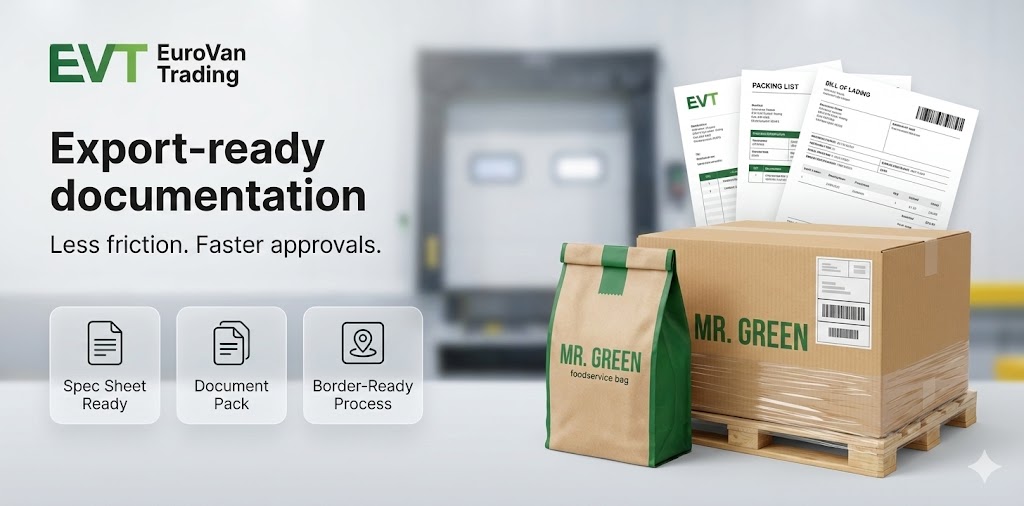
You asked for import regulations and how to position them without overpromising. Here’s the clean, UK-friendly way to say it.
✅ BTOM context (why UK buyers mention it)
The UK’s Border Target Operating Model (BTOM) sets out Great Britain’s approach to Safety & Security controls (for all imports) and Sanitary and Phytosanitary controls (for products including plants and plant products).
So, even when the product is straightforward, buyers mention BTOM because they want to avoid surprises at the border.
⭐ Plant health vs food safety (the key nuance for frozen fries)
For many processed fruit/veg products, the UK draws a line between plant health controls (phytosanitary) and food safety/hygiene requirements.
UK government guidance explains that you do not need phytosanitary certificates for plant products such as fruit and vegetables that have been processed and packaged, and it explicitly includes frozen material in that category.
At the same time, food authorities emphasise that imported fruit and vegetables—fresh, processed, or frozen—must still meet food hygiene and compositional standards (and you usually do not need a health certificate for fruit and veg).
So the practical importer mindset becomes:
- “We’ll confirm the commodity code and any applicable border steps,” and
- “We’ll still treat food hygiene, traceability, and labelling as mandatory.”
That balance is exactly what UK distributors want to hear.
🔥 IPAFFS: when it matters, it matters
When a consignment falls into a category that requires notification, buyers use the UK’s import systems (including IPAFFS) as part of their workflow. The Plant Health Portal’s IPAFFS FAQs also make clear that IPAFFS links with customs declarations through key identifiers (commodity codes, net weight, and CHED reference numbers).
Therefore, Eurovan’s role is simple and useful: we keep product data consistent (descriptions, weights, packaging, specs) so your customs agent can match everything without rework.
🤝 Frozen french fries exporter UK: Egypt–UK trade ties (how to position it accurately)
You also asked to mention the advantage of Egypt–UK trade ties. The UK government’s guidance on the UK–Egypt Association Agreement confirms the agreement is in effect and includes sections on tariff rates on goods and rules of origin.
So the right commercial framing is:
- UK buyers may access preferential terms depending on product classification and origin rules.
- Importers confirm eligibility with their broker, while the exporter supports consistent documentation.
That wording stays credible, helpful, and compliant.
❓ Import frozen chips UK: FAQs
✅ Frozen french fries exporter UK: Is the UK really one of the biggest importers?
Yes. Trade coverage positions the UK as the second-largest import market for preserved frozen potato, and it ties that demand to Britain’s deep-rooted love for potato dishes.
⭐ Potato fries supplier Britain: Which cuts sell best in pubs?
Most pub buyers prefer straight cut in medium-to-thick profiles because it feels closest to the British “chip” expectation. Meanwhile, many pub groups add a second SKU (coated or premium) for delivery and upgraded plates.
🔥 Import frozen chips UK: Coated or non-coated—what should I import?
Import coated fries when you need longer crispness for busy service and delivery. Import non-coated fries when you want a cleaner potato bite for classic sides. Many UK importers stock both because pubs and QSR often need different performance.
💡 Import frozen chips UK: Do frozen fries need a phytosanitary certificate?
Often, no—because UK guidance says you do not need phytosanitary certificates for processed and packaged fruit/veg products, including frozen material, from a plant health controls perspective.
However, your broker should still confirm the exact requirements for your commodity code and product form.
📌 Import frozen chips UK: What about food safety—do I need a health certificate?
Food authorities note that imported fruit and vegetables (fresh, processed, or frozen) must meet food hygiene standards, and you do not normally need a health certificate to import fruit and vegetables.
Your importer still must follow UK food law on labelling and traceability.
✅ Frozen french fries exporter UK: What commodity code do buyers usually use?
Many frozen prepared/preserved potato products fall under HS heading 2004, and the UK trade commodity structure shows the “potatoes… frozen” category under 2004.10, with sub-codes depending on the exact product form.
Your customs agent will choose the final sub-code.
⭐ Potato fries supplier Britain: What packaging formats do UK distributors prefer?
Foodservice distribution commonly prefers larger bags and master cartons for efficient cold-store picking, while retail/private label needs consumer-size packs with strict label readiness.
🔥 Import frozen chips UK: Do UK labels need a UK address?
Yes for prepacked food sold in Great Britain. UK government guidance says that from 1 January 2024, pre-packaged food sold in GB must include a UK address for the Food Business Operator, or if the FBO is not in the UK, the UK importer’s address.
💡 Frozen french fries exporter UK: How do I speed up approvals with a new supplier?
Send a “UK-ready RFQ” with: cut size, coated/non-coated, packaging format, monthly volume, destination port, and price basis (FOB/CFR/CIF). Clear specs reduce back-and-forth and help buyers approve faster.
📌 Potato fries supplier Britain: Can Eurovan support a distributor program?
Yes—if you’re building a long-term range for the UK, use Become a distributor. If you want spot pricing or a first container quote, use Get a quote.
✅ Ready to import frozen chips into the UK with confidence?
The UK rewards exporters who understand two things at once: British taste expectations (crisp, golden, consistent) and importer reality (spec sheets, documentation discipline, and cold-chain delivery). Because the UK remains a major import market for preserved frozen potato, the opportunity stays strong for suppliers who can deliver performance at scale.
If you want to start, share your target channel (pub/QSR/retail), preferred cut, coating choice, and packaging—then request a quotation here: prices.
#FrozenFrenchFriesExporterUK, #FrozenFrenchFriesUK, #FrenchFriesExporter, #FrozenChipsUK, #ImportFrozenChipsUK, #PotatoFriesSupplierBritain, #UKFoodserviceSupply, #UKWholesaleFood, #FrozenPotatoProducts, #IQFFrozenFries, #CoatedFries, #CrispyFries, #PubFoodUK, #FishAndChipsSupply, #QSRSupplyUK, #HORECAUK, #PrivateLabelFries, #BulkFrozenFries, #ReeferContainerShipping, #ColdChainLogistics, #UKImportCompliance, #BTOM, #UKCustomsClearance, #HS200410, #EgyptToUKExport, #EgyptFoodExporter, #FoodDistributorUK, #WholesaleFries, #FoodImportersUK, #EurovanTrading